
When Is a Sworn Translation Required? A Practical Guide for Organisations and Individuals
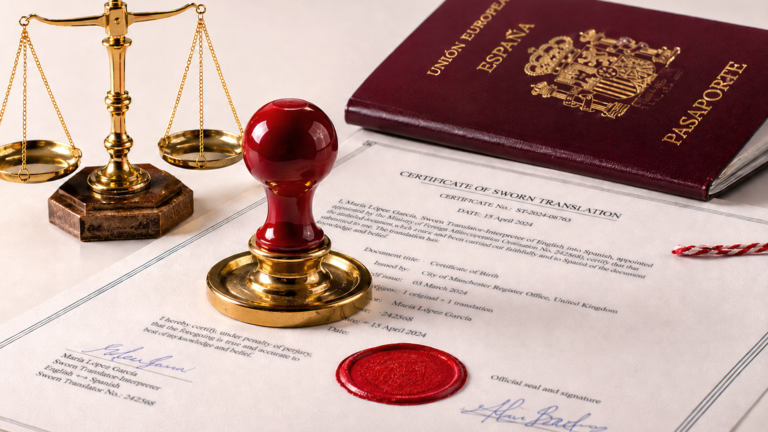
A sworn translation is usually required when an authority, court, public registry, university, professional body, or government institution asks for an official certified version of a document in another language. In these cases, an accurate translation is not enough on its own: the document must also meet the certification and format requirements set by the receiving authority.
This is where questions often arise: what counts as a sworn, official, or certified translation? Requirements vary by country and by receiving authority, so a translation accepted in one context may not be valid in another.
For organisations and individuals alike, understanding these requirements before submitting documents can help prevent delays, extra costs, and administrative complications.
Why sworn translation requirements are often misunderstood
A major challenge is the absence of a single international standard for defining an official translation.
Each country has its own rules for determining what qualifies as an official translation. The requirements can vary depending not only on the jurisdiction, but also on the purpose of the document and the authority receiving it.
In some cases, an official translation must be completed by a sworn or certified translator formally authorised by a competent authority. In others, the translation may need notarization, a signed statement of accuracy, or legalization through additional procedures, such as a Hague Apostille when required for international use. Certain authorities may also require the translator to appear in an official registry, while others may accept translations issued by accredited language solutions providers.
As a result, a translation that is considered official in one country or administrative context may not meet the requirements of another. The key question is not only whether the translation is accurate, but whether it satisfies the specific rules of the receiving authority.
Because requirements are set by the receiving authority, the safest approach is to check the authority’s own instructions before ordering or submitting the translation. This is especially important for court, immigration, academic, registry, and cross-border corporate procedures.
Common situations where organisations need sworn translations
Businesses and institutions frequently require sworn translations when conducting official activities across borders.
Examples include:
- Company registration documents
- Articles of incorporation
- Powers of attorney
- Court documentation
- Regulatory submissions
- Public tender documentation
- Commercial registry filings
In these situations, acceptance depends on whether the receiving authority, such as a court, public registry, regulator, or notary, recognises the document in the format provided.
Before submitting it, organisations should confirm whether the authority requires a translator’s stamp and signature, an original paper copy, a digital file, or any additional formalities.
Common situations where individuals need sworn translations
Individuals often need a sworn translation when submitting personal, academic, or professional documents to an authority, university, professional body, or other official institution that requires them in a specific language.
Common examples include:
- Birth certificates
- Marriage certificates
- Academic diplomas
- University transcripts
- Criminal record certificates
- Immigration applications
- Residency and citizenship procedures
Because these documents are typically submitted to government bodies, universities, or professional organisations, the required certification standards are often strict.
A missing certification or incorrect format can delay an entire application process.
What to verify before requesting a sworn translation
Clarifying the requirements before translation begins is one of the best ways to avoid problems.
Before requesting a translation, it is worth confirming:
- Which authority or institution will receive the document?
- In which country will it be used?
- Is a sworn translation specifically required?
- Is notarisation or apostille certification also necessary?
- Are digital copies accepted, or are original paper documents required?
Obtaining clear answers upfront can save considerable time and reduce the risk of rejected documentation.
Why professional guidance matters
Official document requirements can be more complex than many people expect.
A translation may be accurate and professionally prepared, yet still fail to meet the receiving authority’s requirements if the appropriate certification process has not been followed. Requirements may vary depending on the document type, destination country, and intended use.
For this reason, working with an experienced language solutions provider can help organisations and individuals manage official documentation across languages more effectively.
Seeking guidance early often helps avoid unnecessary delays, additional costs, and the need to repeat parts of the process later.
Why early planning matters for sworn translations
For official purposes, translation is only one part of the submission. The receiving authority determines what is acceptable, including the translator’s credentials and the required delivery format.
Making these requirements part of the process from the start helps define the next step more clearly. Whether the document is for a business filing, legal procedure, academic application, or personal administrative matter, the goal is to submit documentation that can be reviewed without questions about its validity.